Liebherr LG 1750
KR Wind
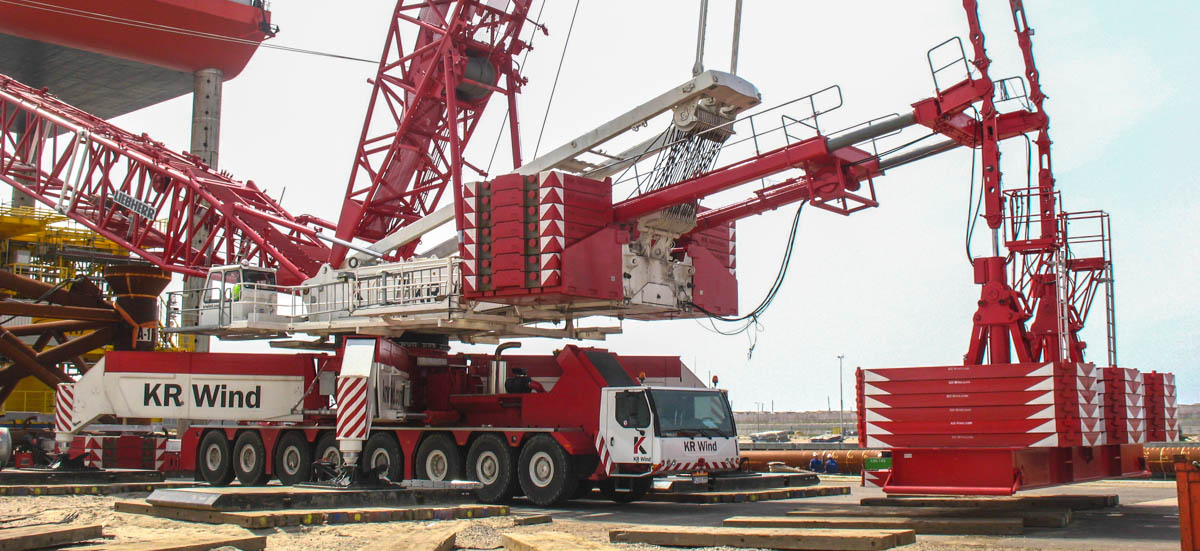
In the spring of 2009, this impressive Liebherr LG 1750 of KR Wind from Nørresundby (DK) was deployed in the port of IJmuiden (NL) for heavy lifting operations. The company KR Wind was taken over by Mammoet in 2011 and therefore no longer exists today.
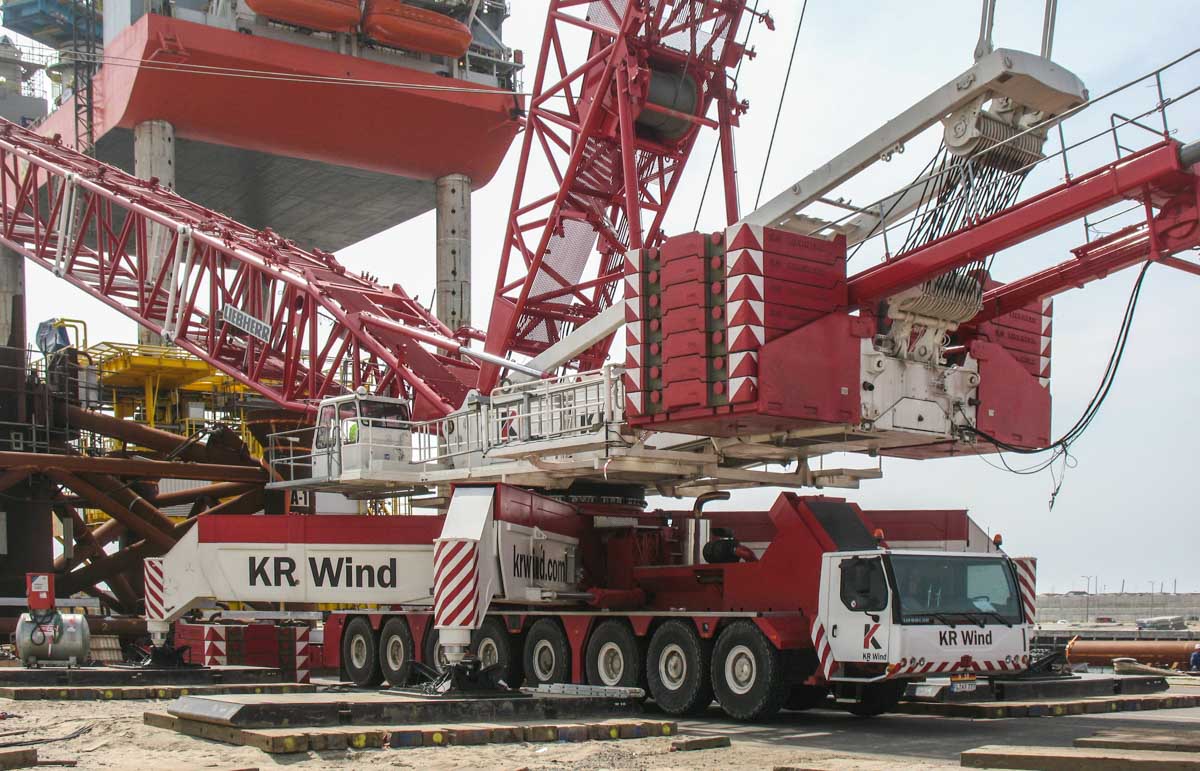
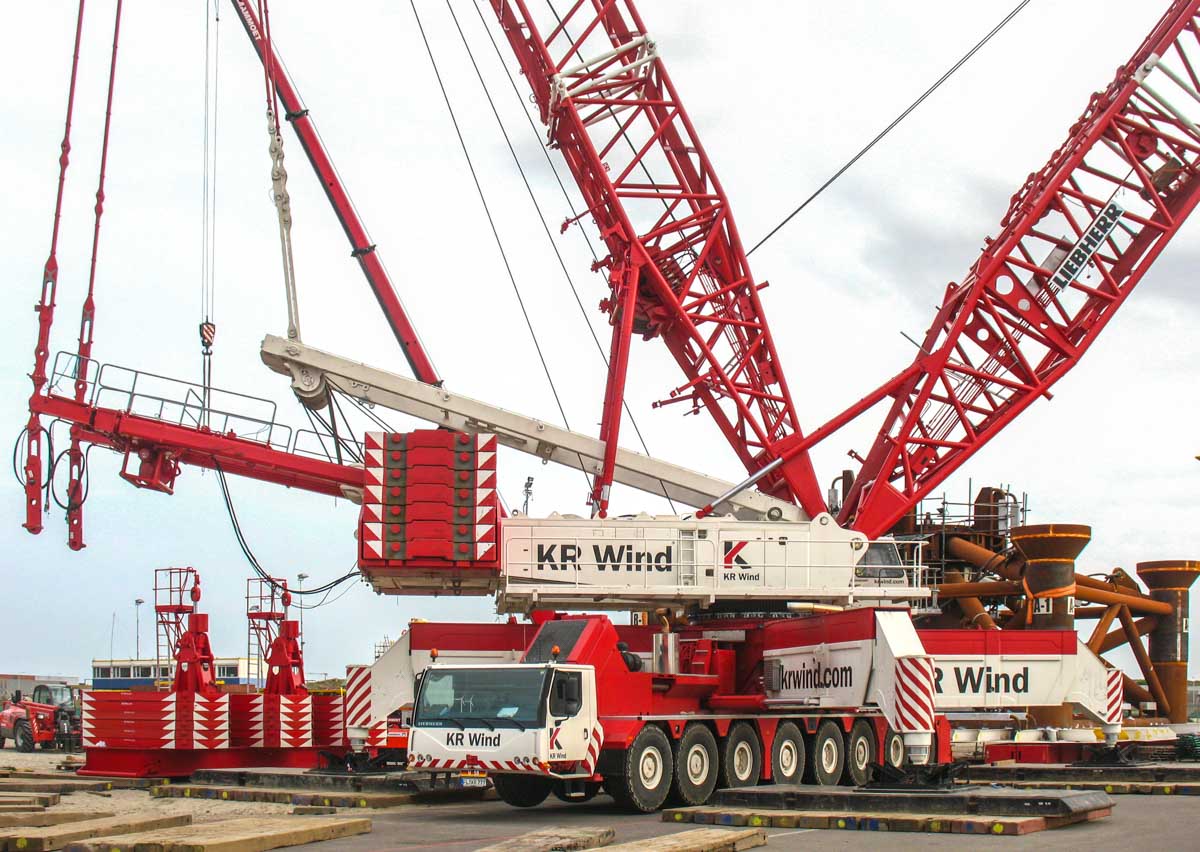
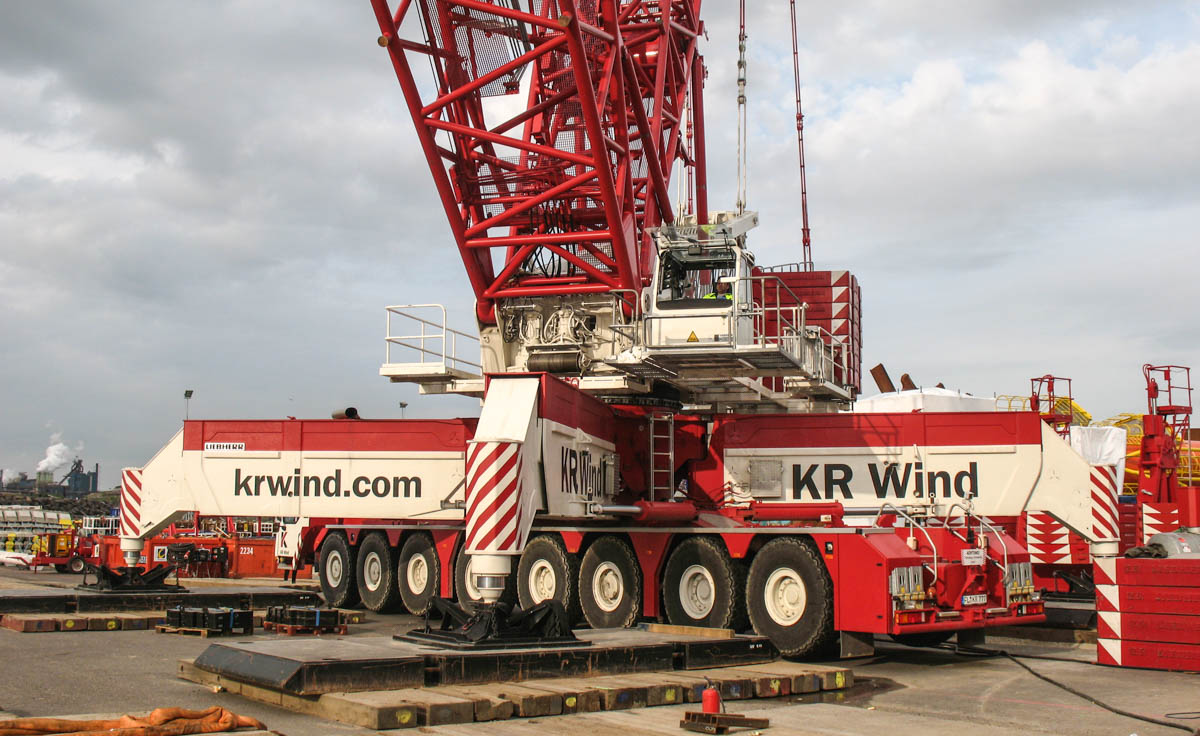
The Liebherr LG 1750 is an 8-axle 750-tonne crane with a lattice boom. For road transport, the upper structure must be separated from the carrier, as can be seen here.
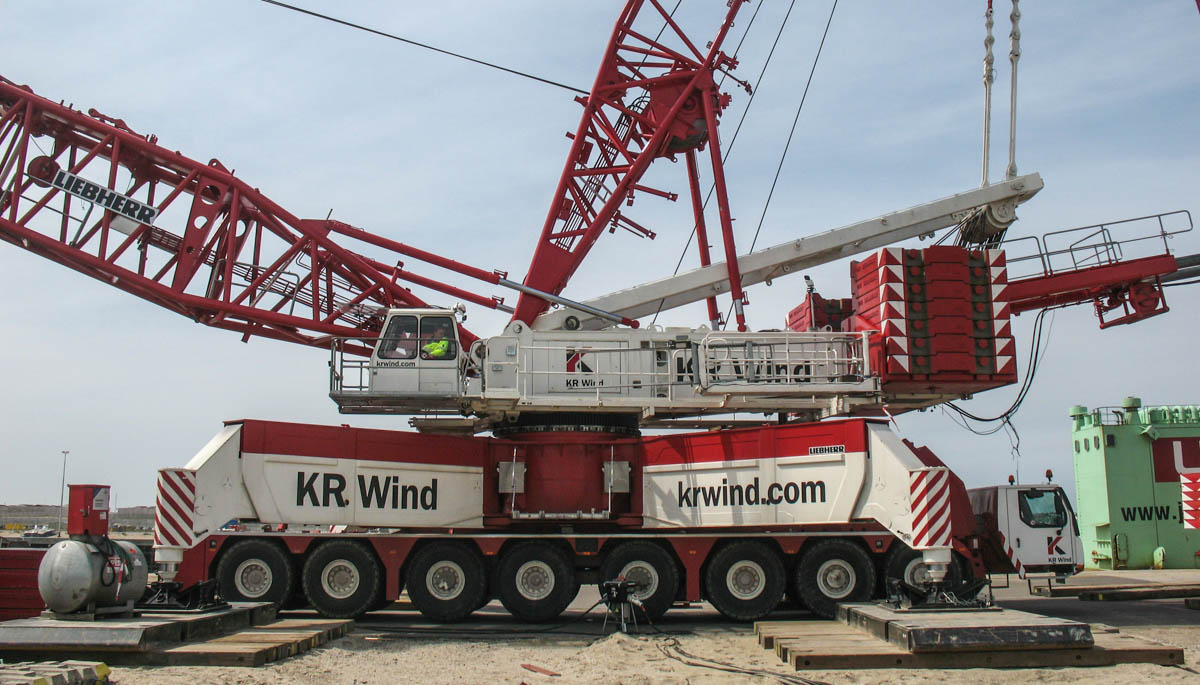
When the crane is deployed in superlift configuration, only the half outrigger base of 12.3 x 12.1 metres can be used. This is mainly to allow 360-degree slewing with the superlift ballast.

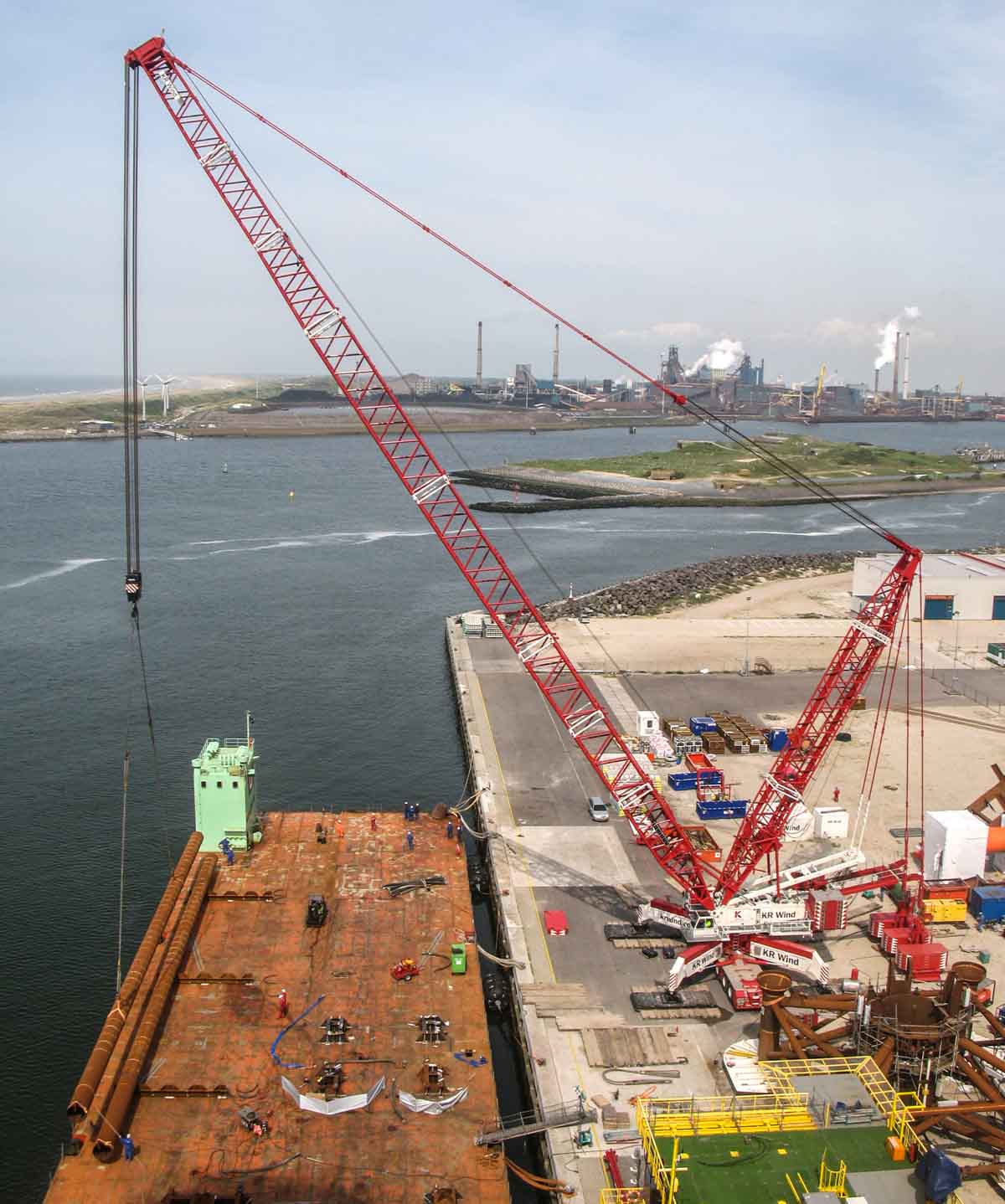
On this day, the crane was loading heavy foundation piles from storage onto a pontoon. These piles are required to stabilise the frame, visible at the bottom right of the photo.
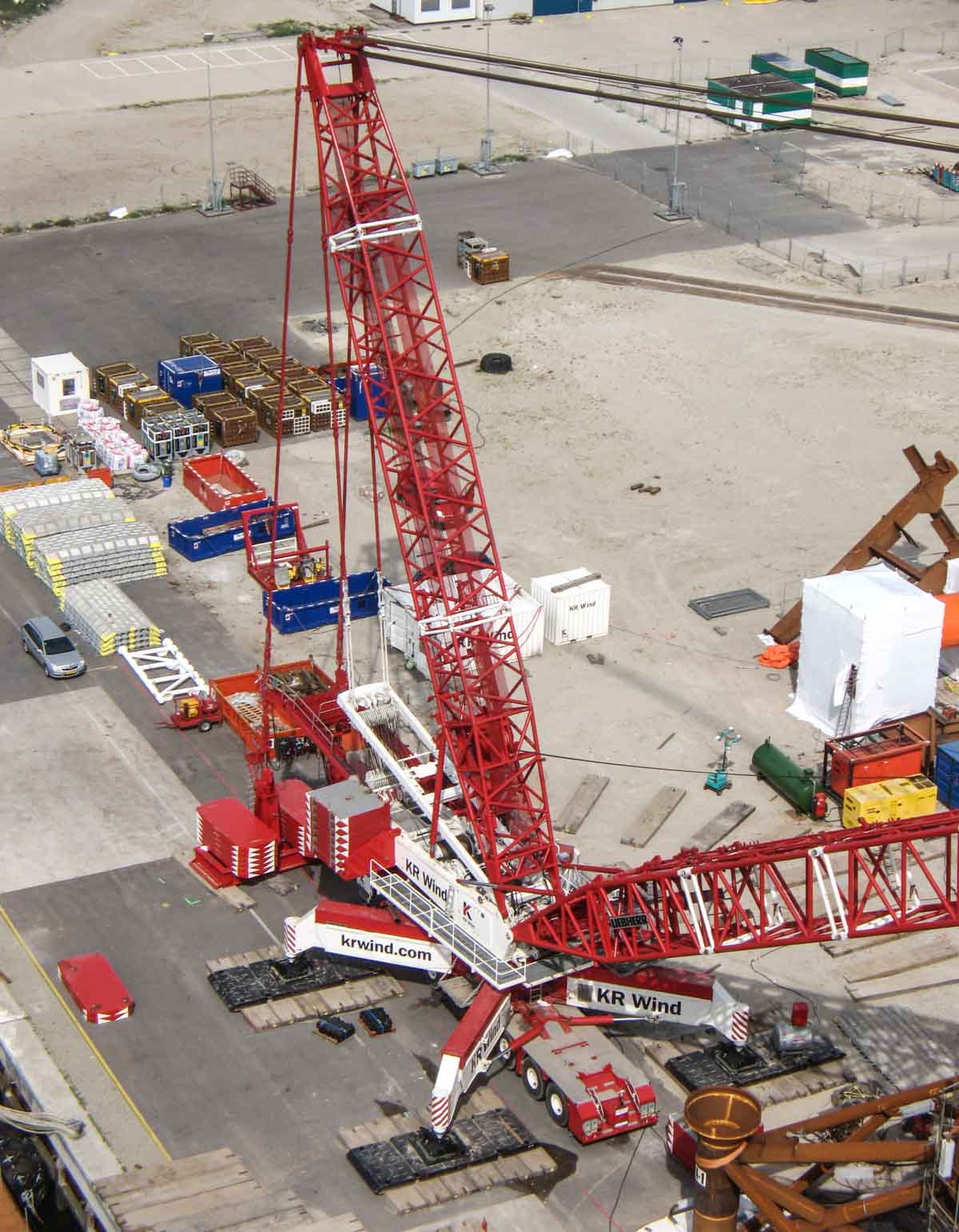
The superlift mast, or derrick mast in Liebherr language, has a total length of 31.5 metres.
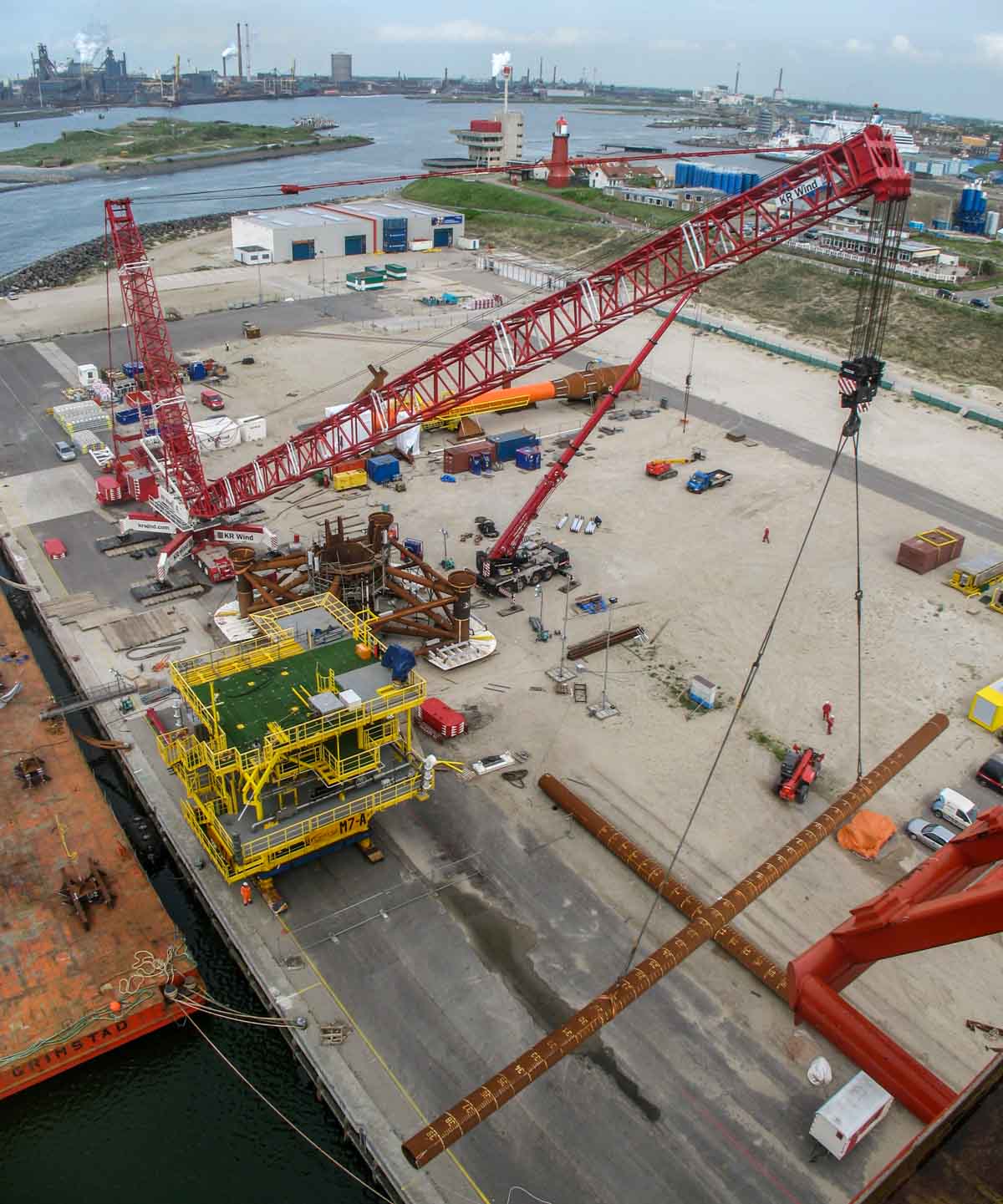
Here the crane is assembled in SLDB configuration. This means main boom with reduced section in superlift configuration with superlift ballast. The main boom is 77 metres long here.
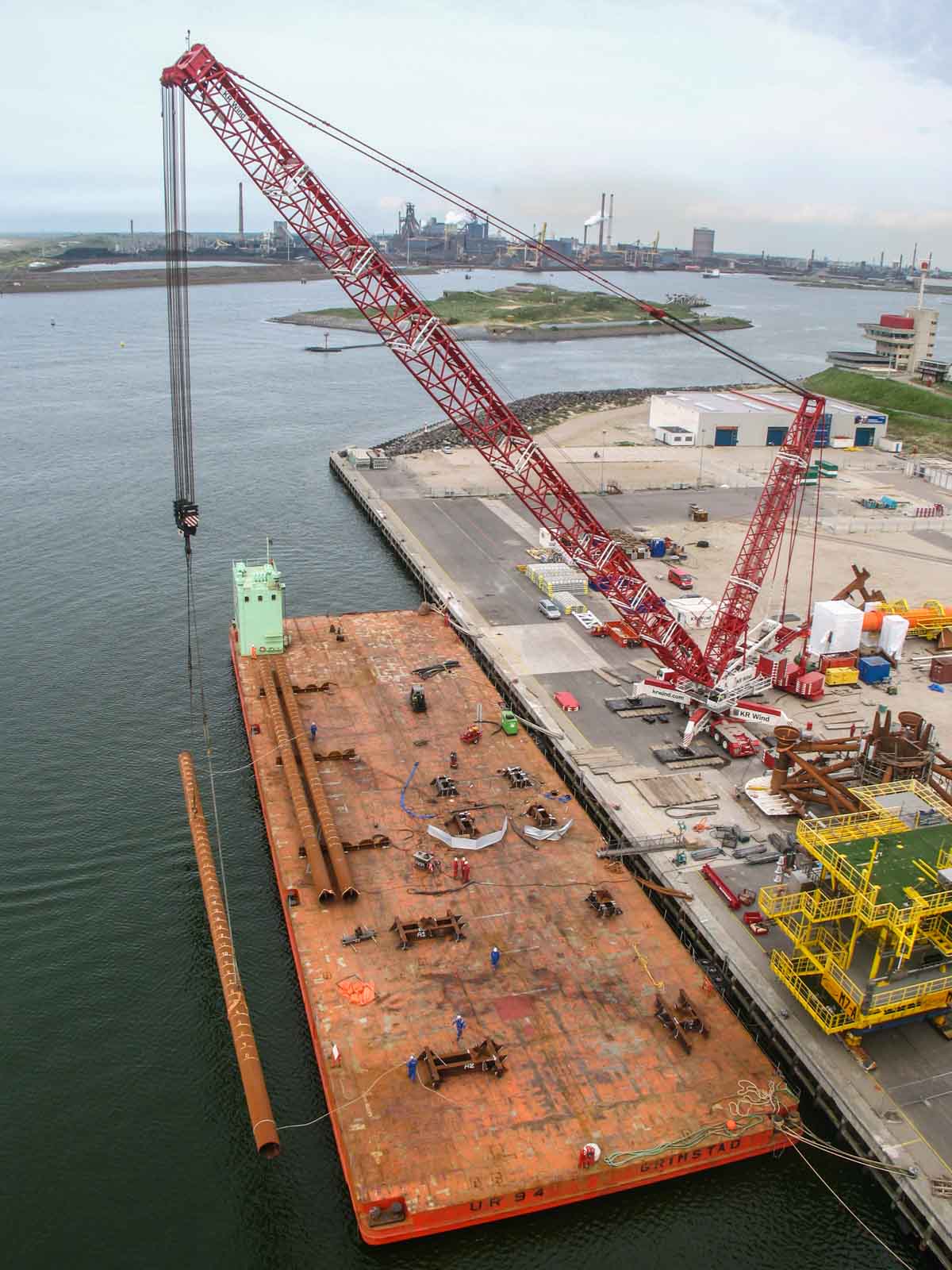
The piles are picked up at a large radius and then slewed above the pontoon; the radius is deliberately kept slightly larger so that the superlift ballast remains suspended.
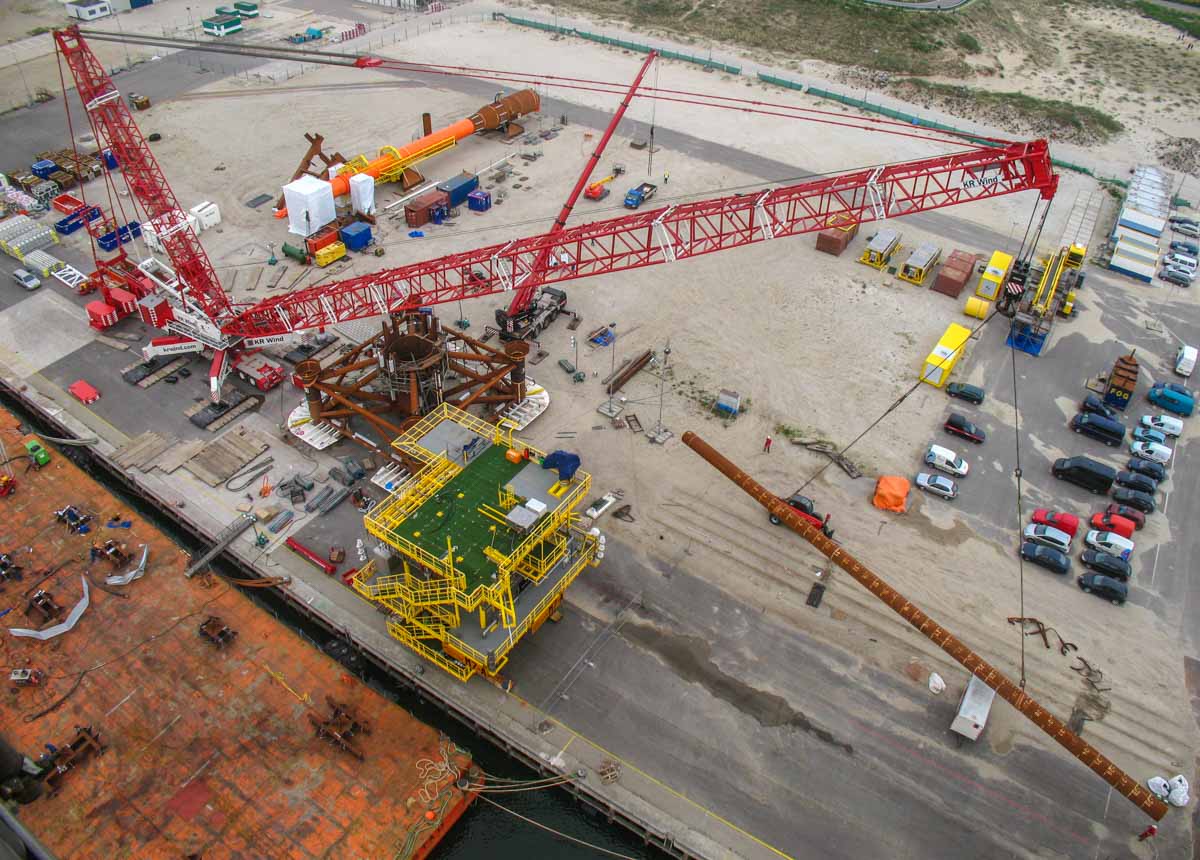
The radius is approximately 70 metres, the piles are 46 metres long and weigh approximately 70 tonnes.
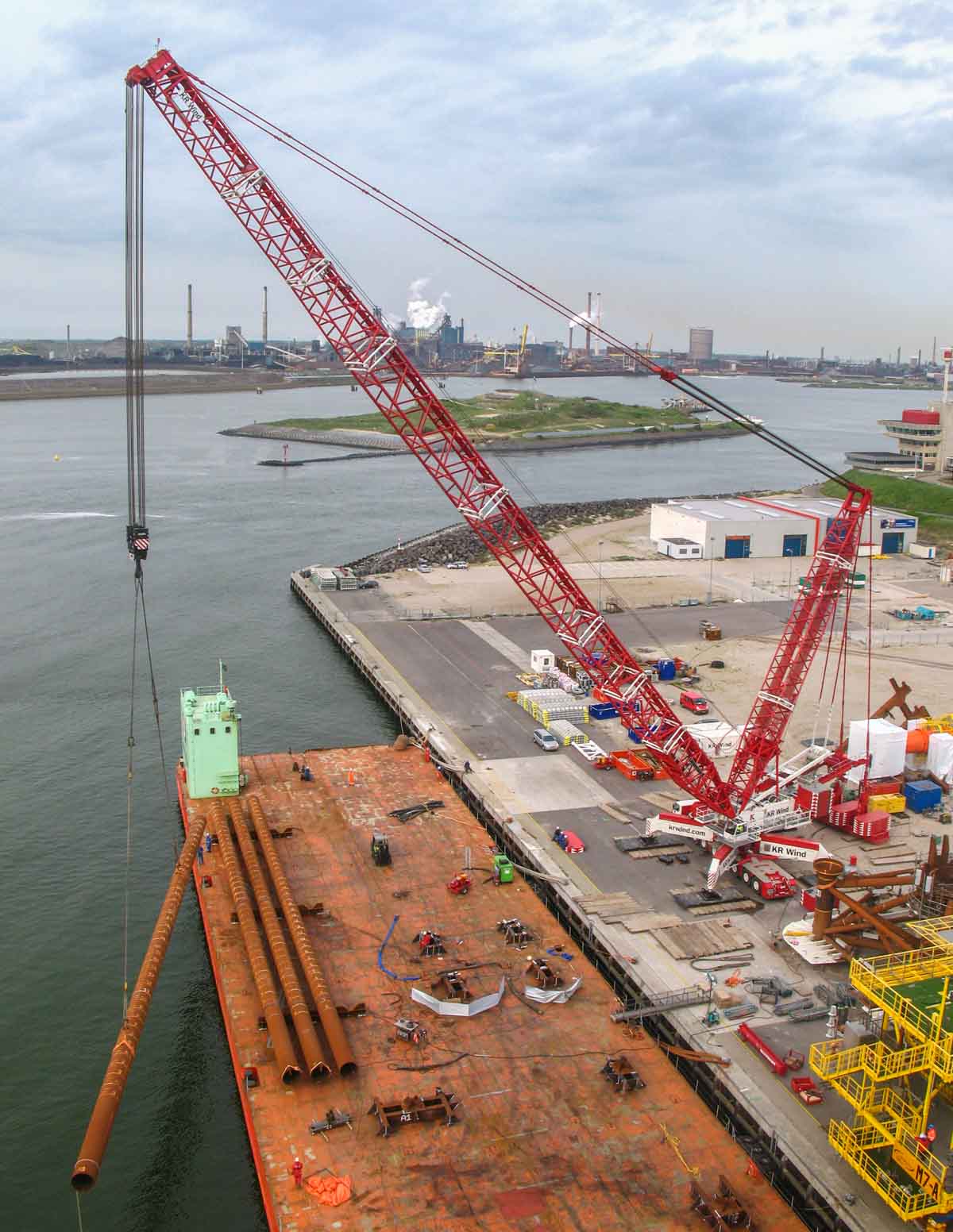
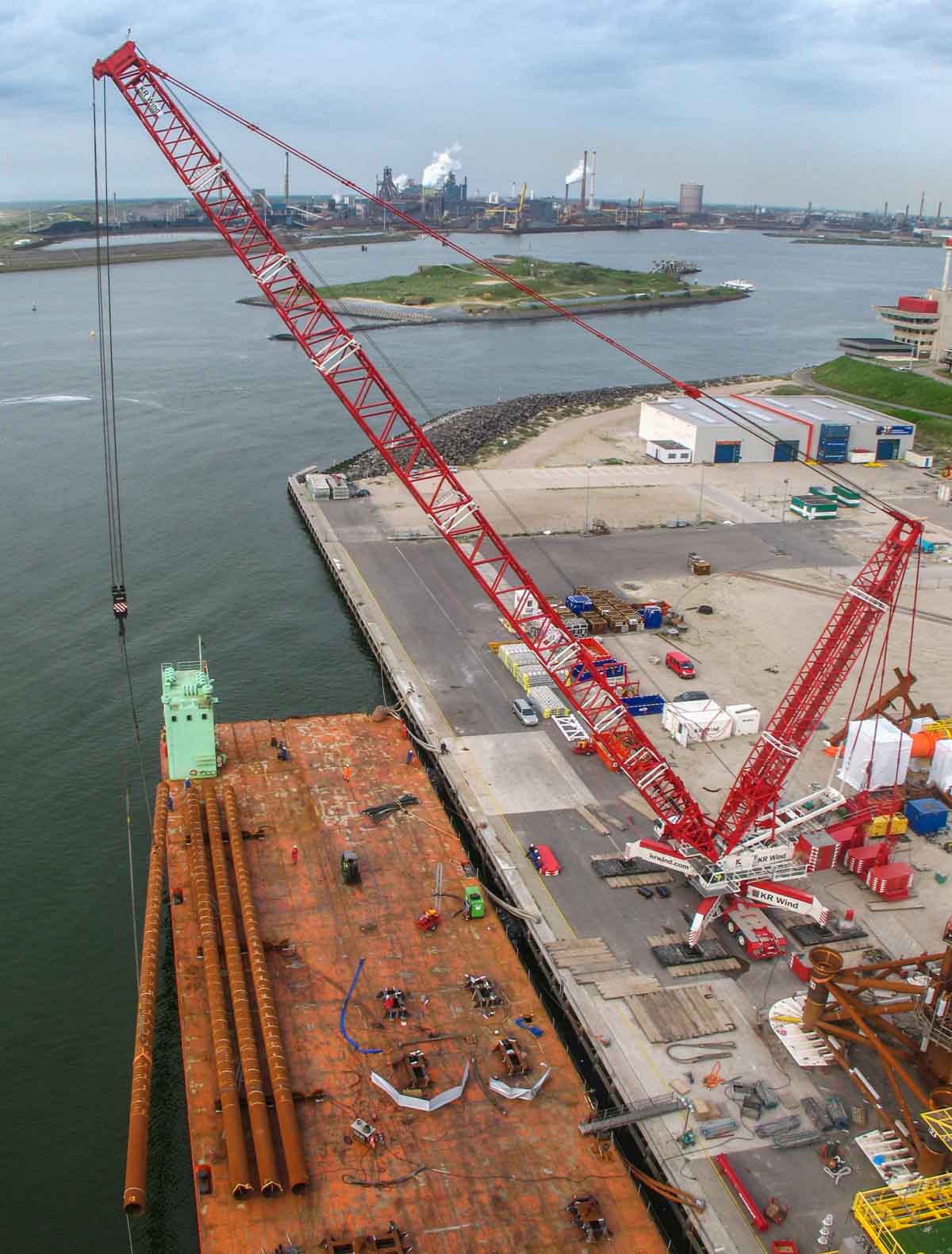
The last pile is also relatively quickly loaded onto the pontoon.
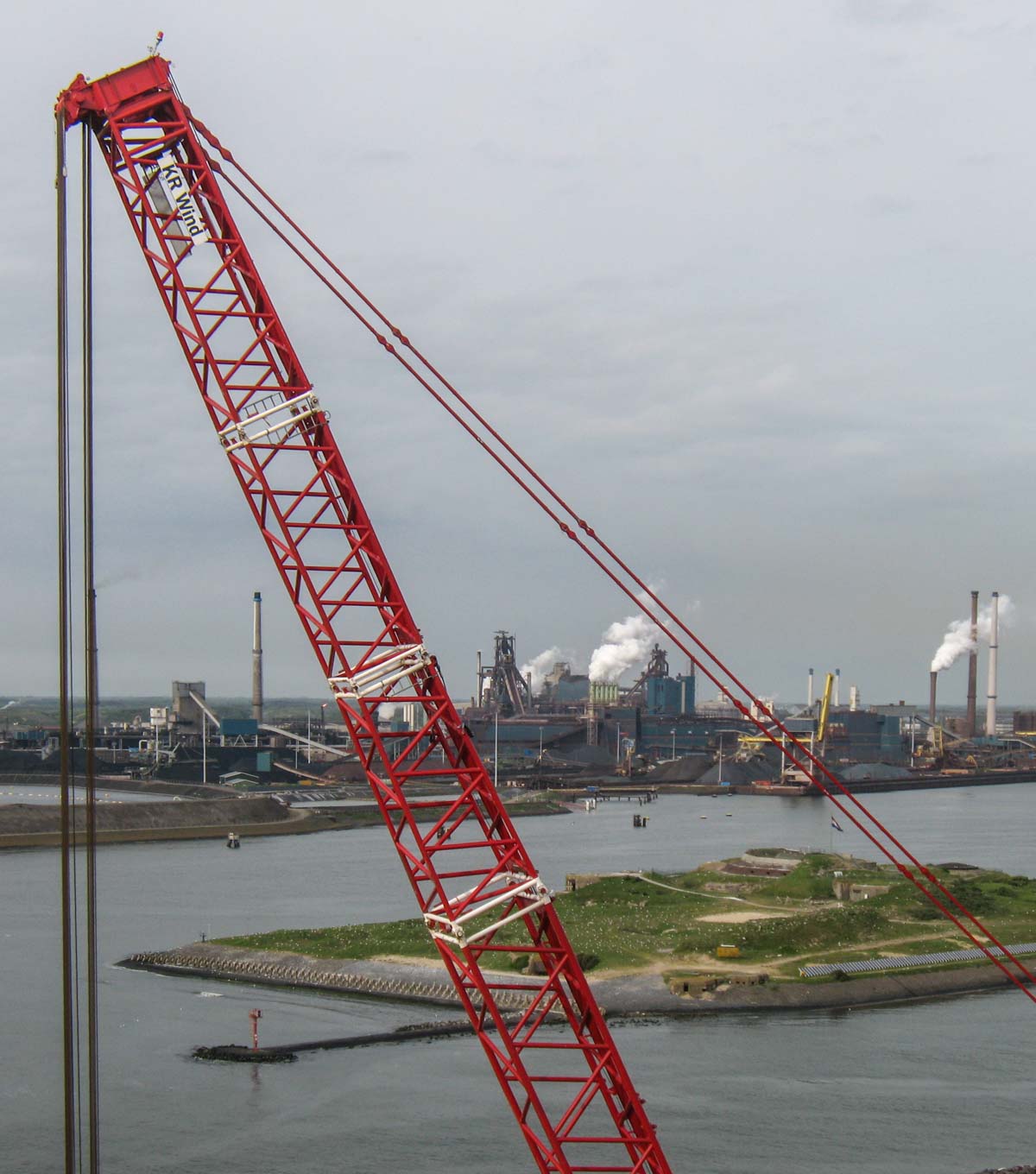
In SLDB configuration, the main boom has a minimum length of 35 metres and a maximum length of 133 metres.
KR Wind was founded in 2002 as a joint venture between Mammoet and Kranløft Danmark. The company was mainly active in the transport and installation of wind turbines.
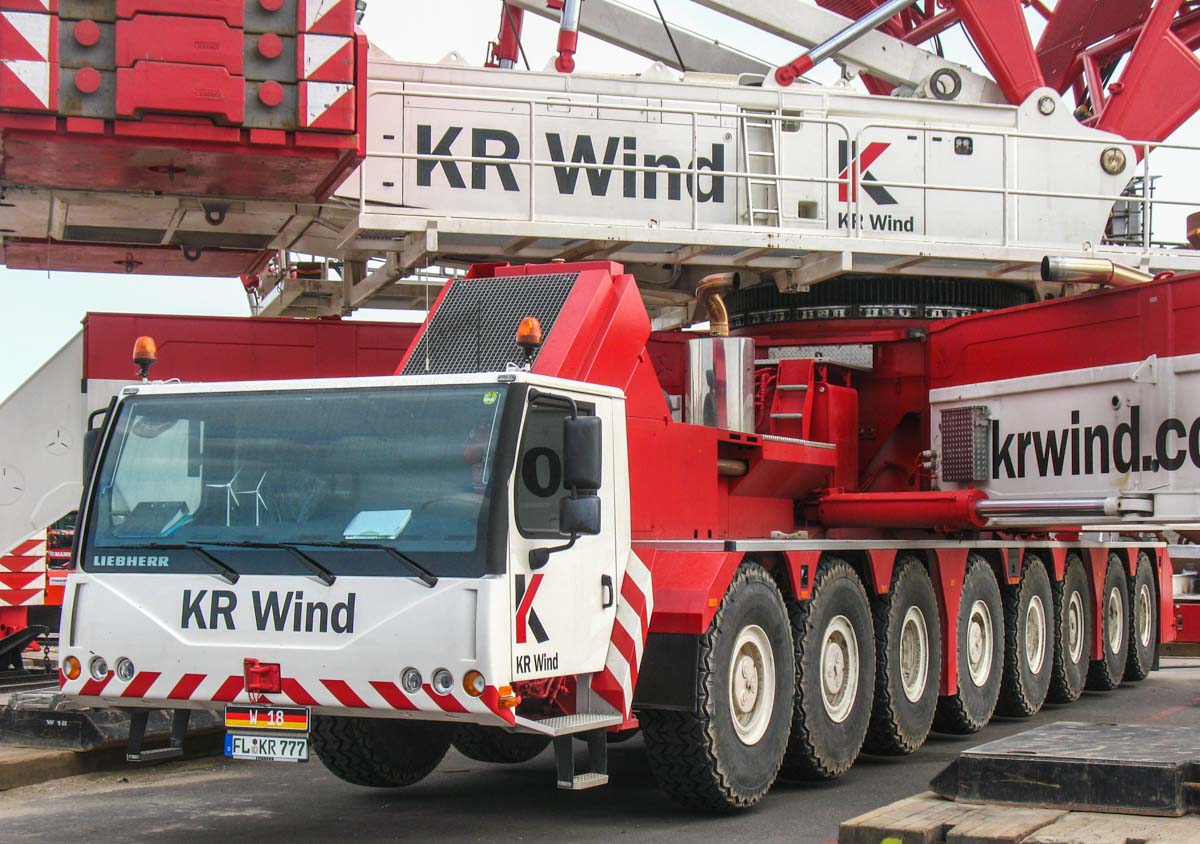
The 8-axle carrier is powered by a Liebherr D9508 A7, an 8-cylinder diesel engine with an output of 500 kW (680 hp). Axles 1, 2, 4 and 6 are driven, all axles are steerable.
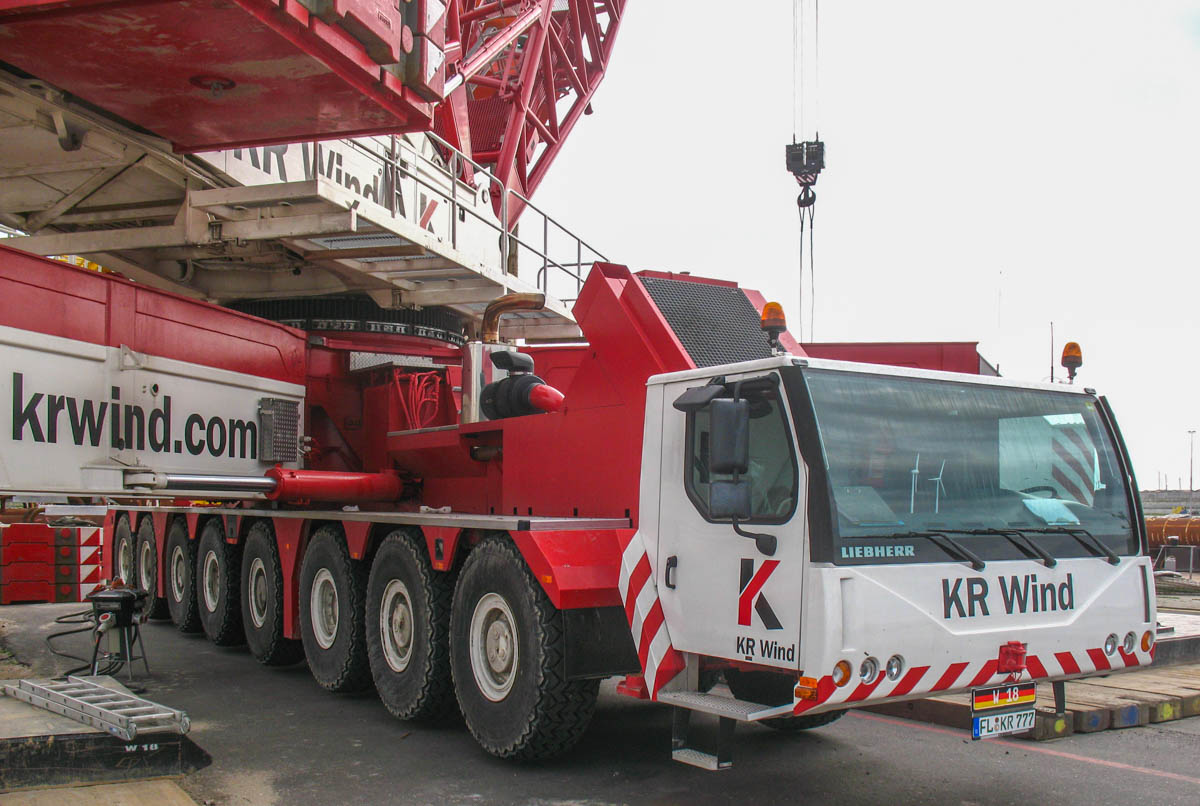
Although KR Wind was a Danish company, this crane carried German registration plates. This is often done because it provides easier access to other European countries.
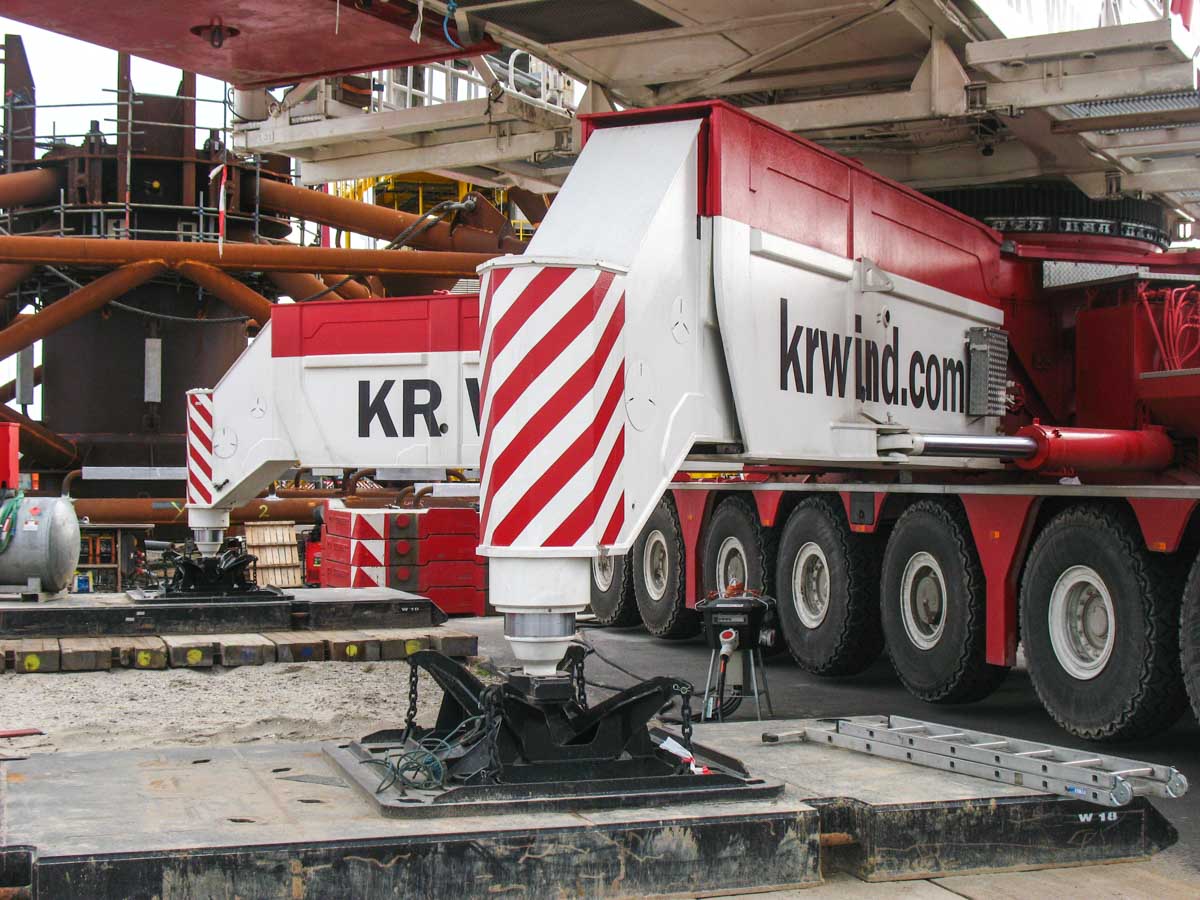
When the crane is in superlift configuration, only the half outrigger base of 12.3 x 12.1 metres can be used. When the crane is deployed with main boom only, the outrigger base can be extended to 16 x 16 metres. During road transport, the outriggers can remain mounted on the carrier. The total weight is then 96 tonnes.
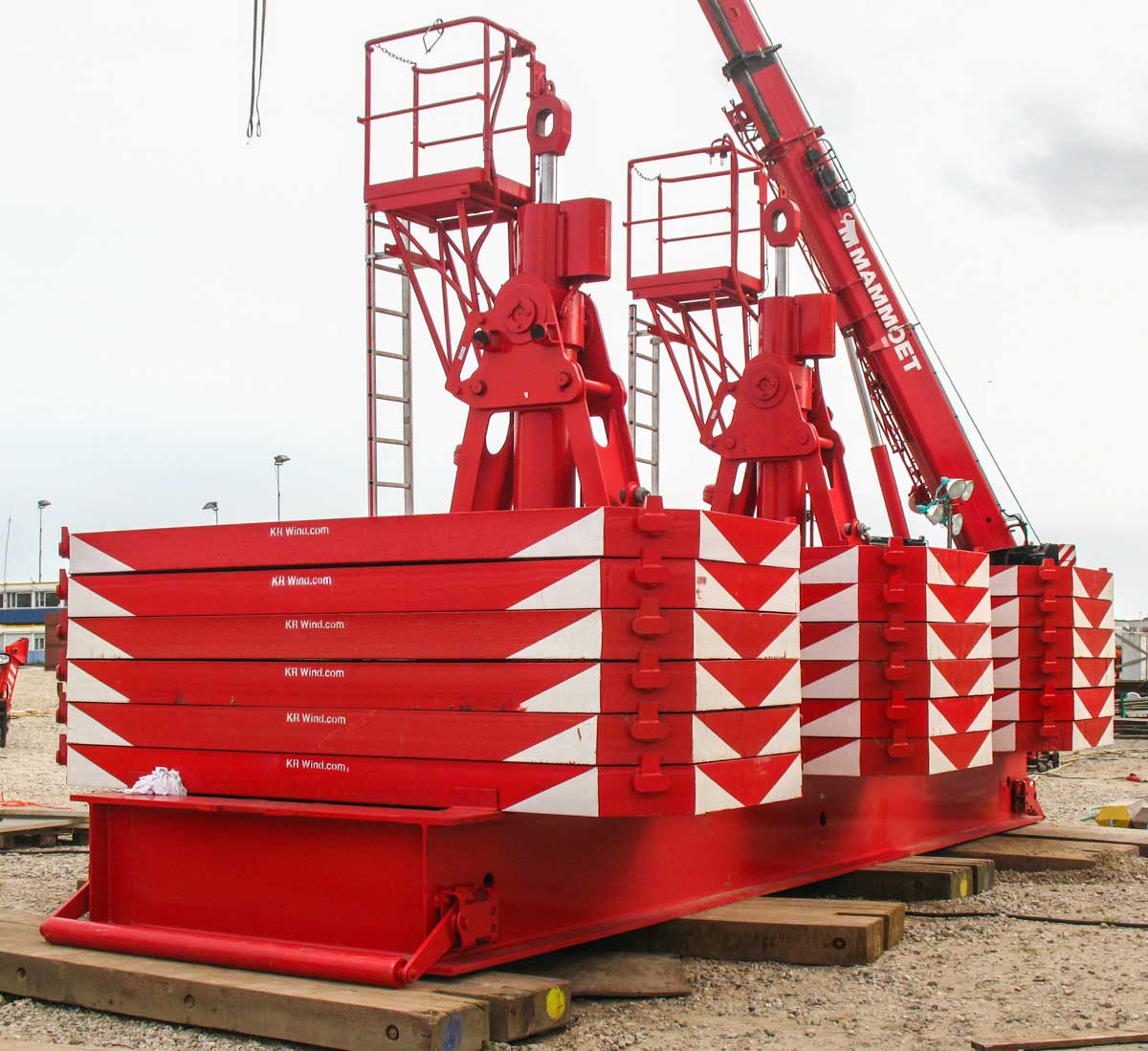
A total of 18 slabs of 12 tonnes each are stacked on the tray, resulting in 216 tonnes. The superlift ballast can be set to a maximum counter radius of 20 metres.
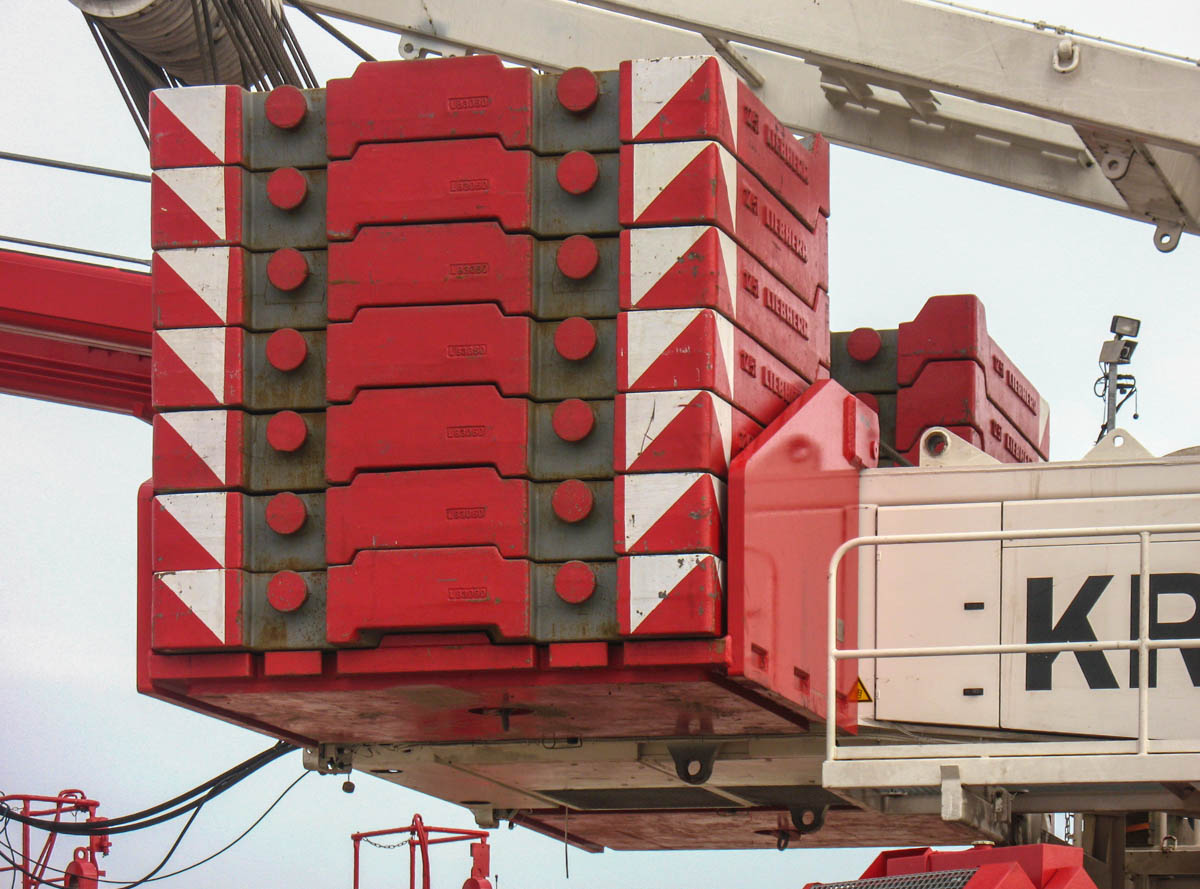
A total of 195 tonnes of ballast is mounted on the upper structure. This consists of two frames with seven blocks of 12.5 tonnes on each side. The maximum ballast on the upper structure is 245 tonnes.
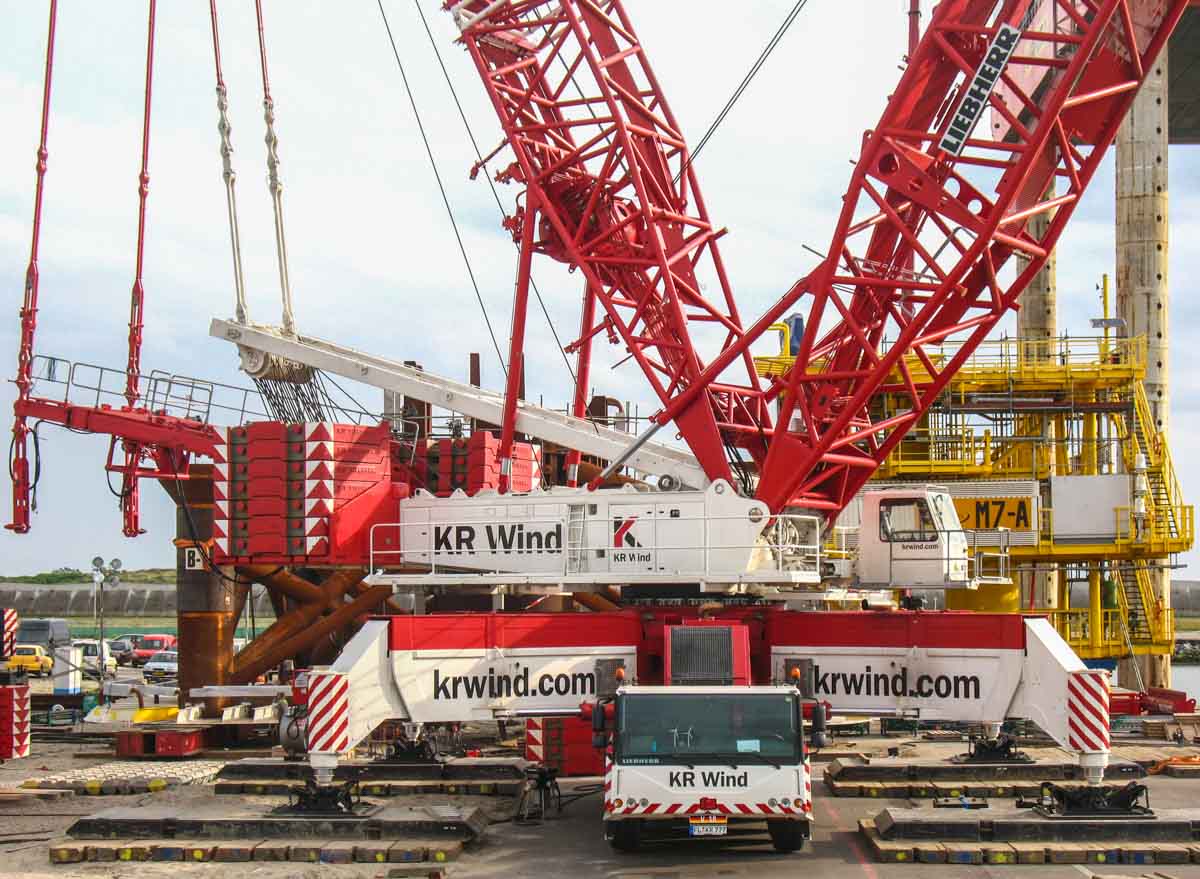
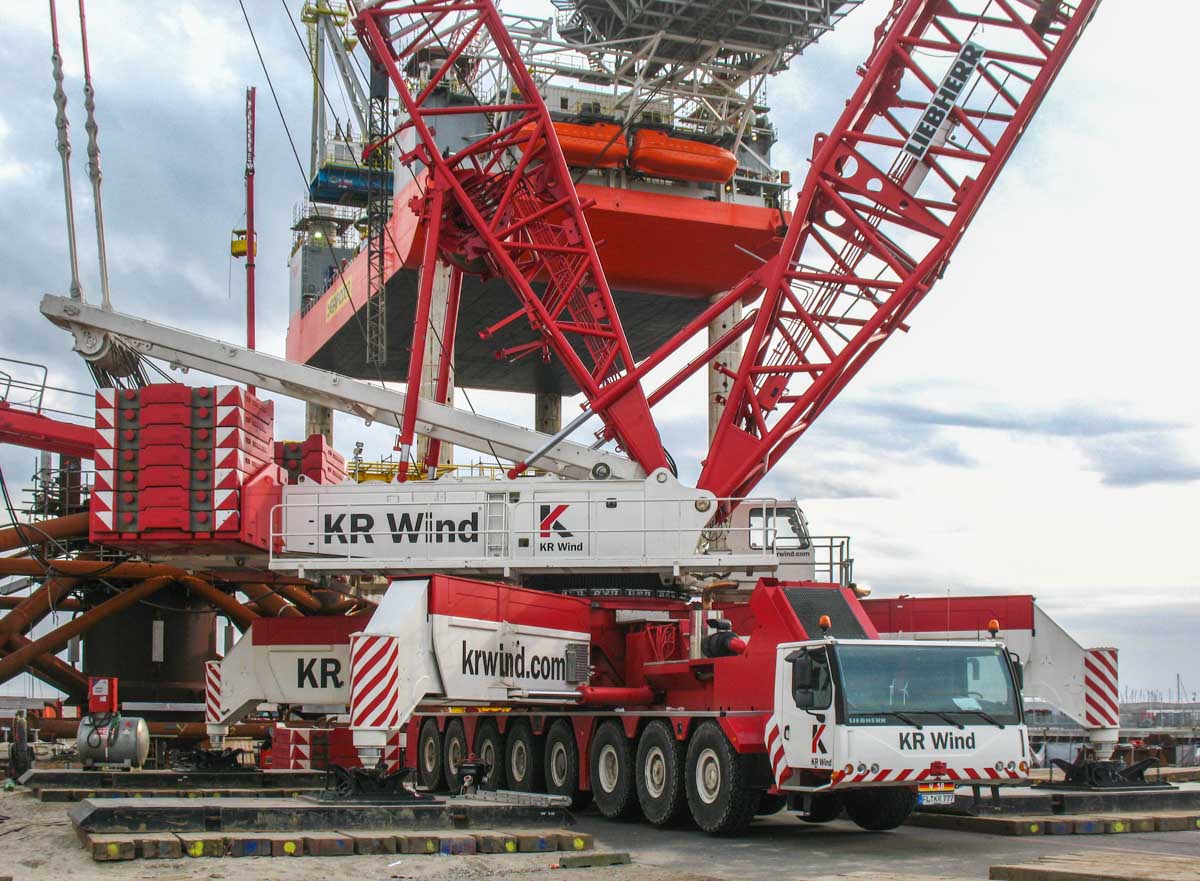
A very impressive and robust crane!
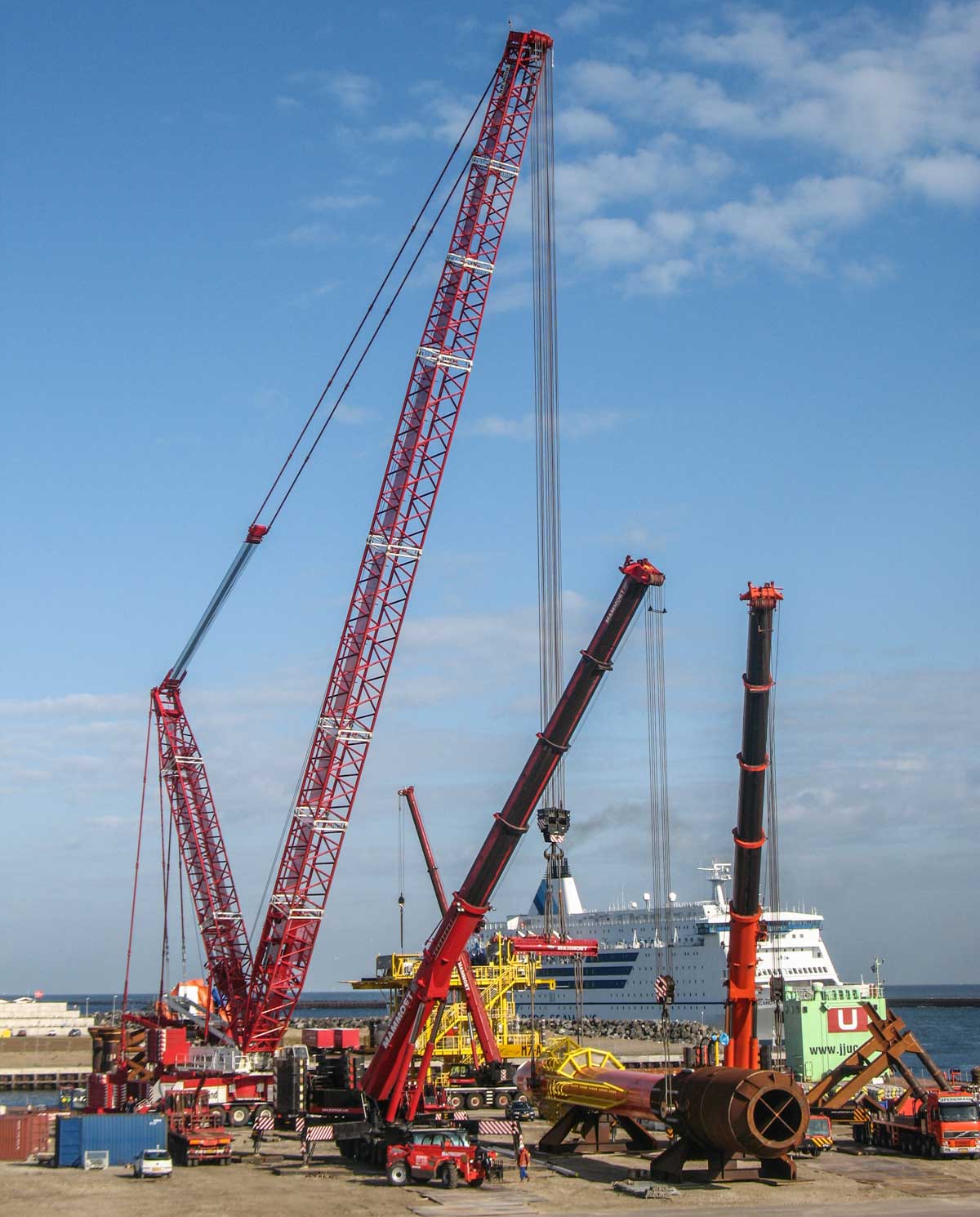
A few days later, the crane was once again able to demonstrate its strength. This time, a monopile had to be lifted.
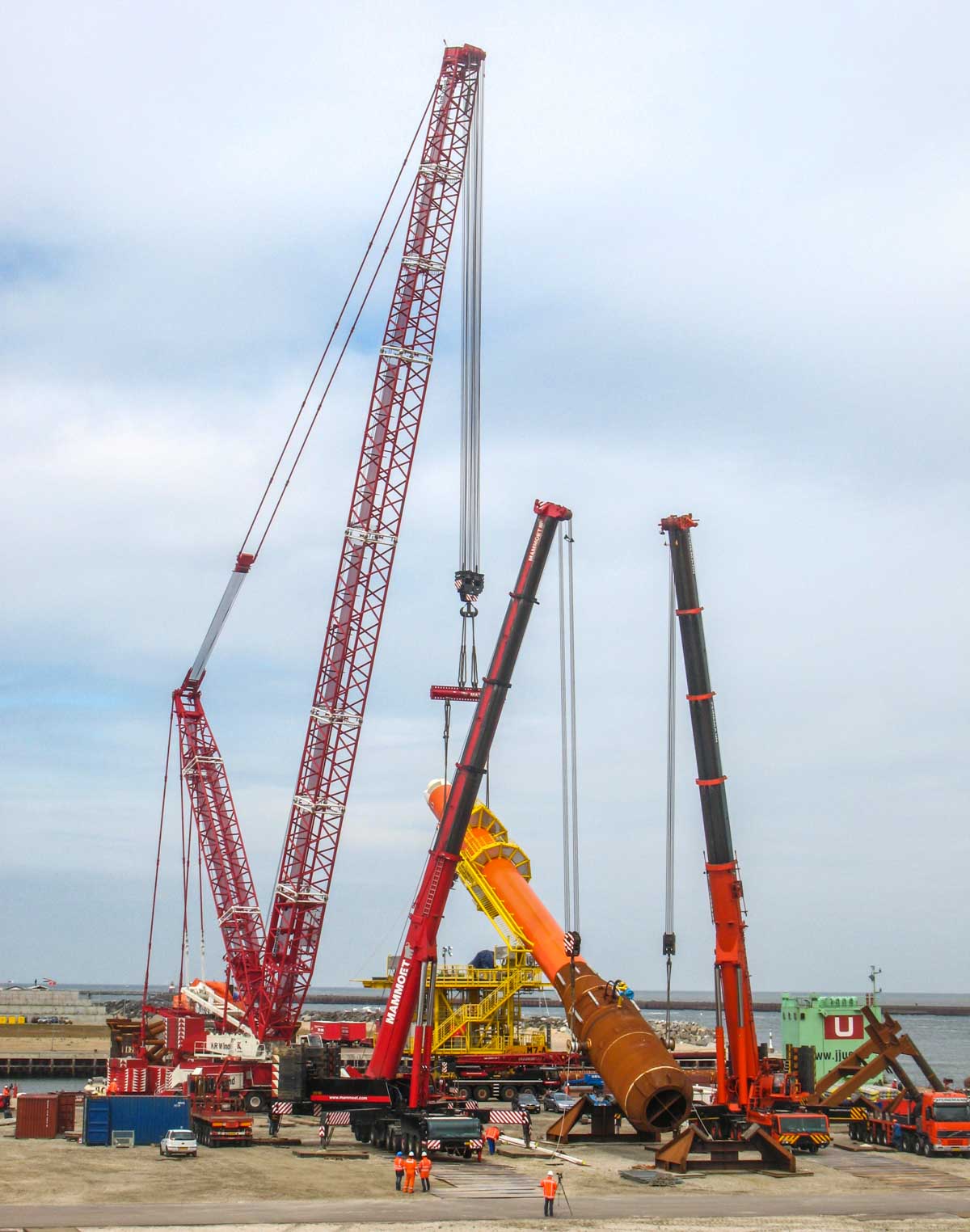
This monopile, weighing 265 tonnes, first had to be brought from a horizontal to a vertical position. To tilt the monopile, two Demag AC 650 cranes, from Mammoet and Peinemann, were deployed.
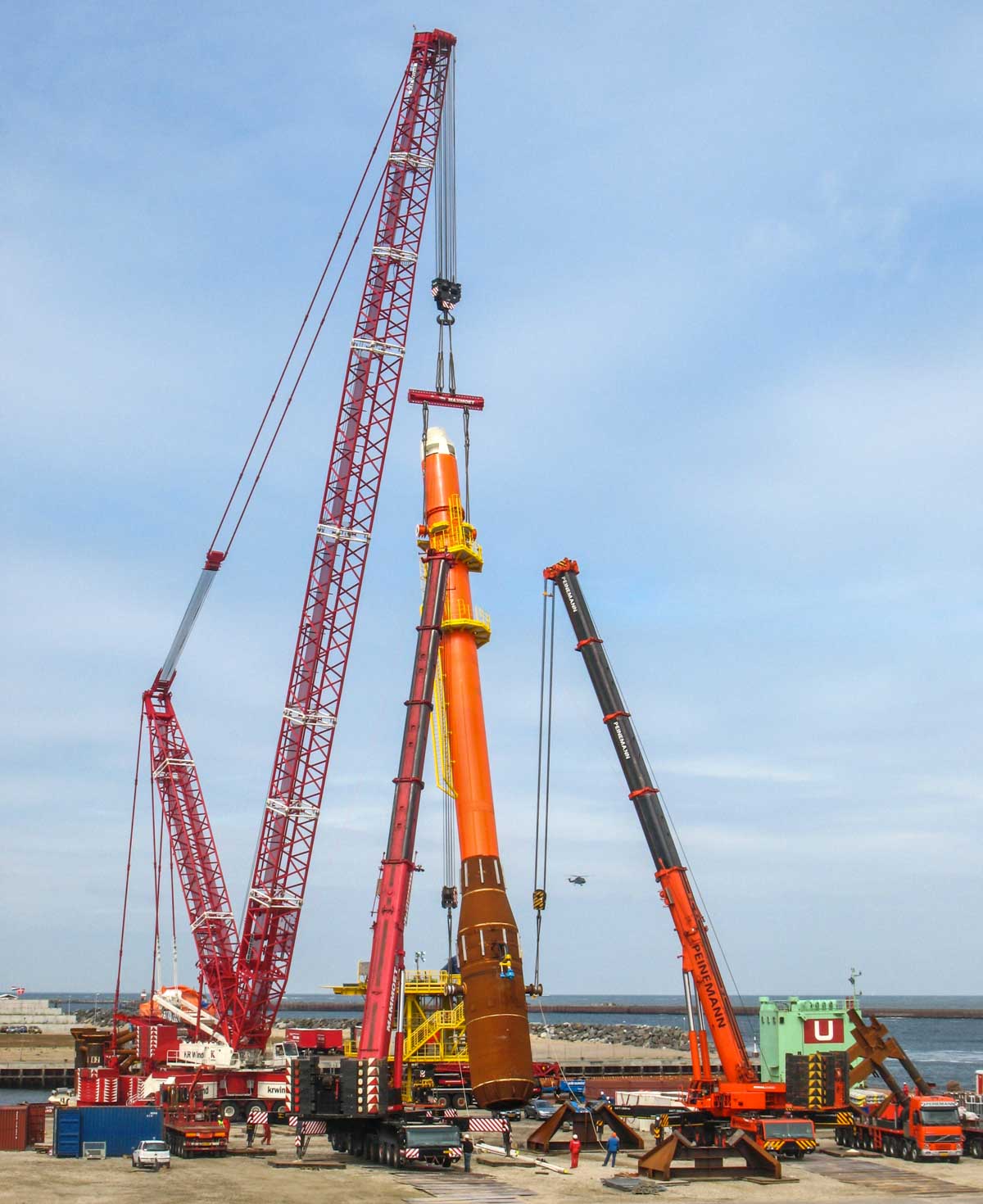
Both Demag AC 650 cranes have their main booms extended to a length of 35.5 metres and are equipped with 140 tonnes of ballast. The LG 1750 is still configured with a 77 metre main boom, but has increased the superlift ballast to 266 tonnes. The maximum superlift ballast is 400 tonnes.

The monopile is placed in vertical position in the frame, after which it will be transported offshore for installation.
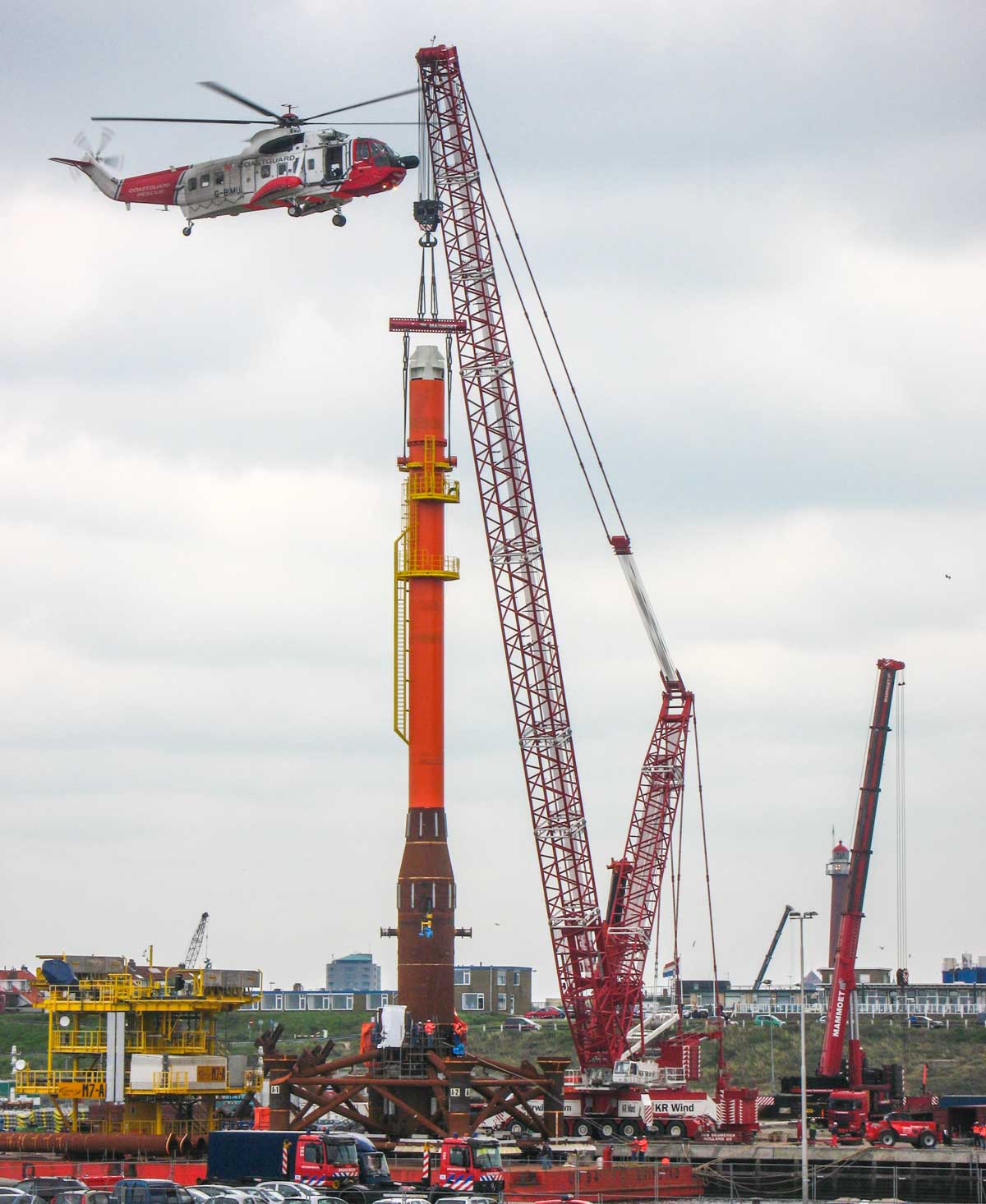
During the heavy lifting operations, a large emergency services exercise took place to simulate a maritime emergency. A very impressive crane that performed equally impressive lifting work here!